


 25 Aug 2026
  FA Kuanysh Batyrbekov
 Australia Makes History at the 24th ASEAN+ Age-Group Chess Championships in Singapore
Singapore, August 2026 — Australia has produced one of its strongest international performances at the 24th ASEAN+ Age-Group Chess Championships, with IM James Morris sharing =2nd place in Classical and winning the 2nd place trophy in Blitz, Nyra Venkat claiming a shared bronze medal in G08 Classical competition and the U10 boys team (comprised of of Leo Kuncoro, Harvey Kuncoro, Kaisar Batyrbekov, Aidan Batyrbekov, Ethan Wu, and Andrew Ng) winning bronze medals in the U10 Classical, Rapid and Blitz standings - whilst edging out regional powerhouses India and China across all three formats. The result marks a historic breakthrough for Australian junior chess, delivering a rare sweep of podium finishes across the tournament’s main time controls.
The 24th ASEAN+ Age-Group Chess Championships were staged in Singapore from 7 to 17 August 2026 under the auspices of the ASEAN Chess Confederation led by IA Ignatius Leong, with events across junior, premier, challenger and senior divisions. The schedule featured nine rounds of Standard chess, seven rounds of Rapid and nine rounds of Blitz, creating a demanding multi-format test of consistency, stamina and depth.
Australia’s achievement was especially notable because the U10 team placed ahead of India — one of the world’s strongest chess nations and a regular medal contender in Asian junior events, represented by Dharagan S V, Dahveed Sibi Kurisinkal, Mokshith Davuluru, Ihaan Das, and Lakhani Aveer Sunder. To finish ahead of India even once would have been significant; to do so in Classical, Rapid and Blitz underlines the breadth of Australia’s performance and the resilience of its players across very different competitive conditions. Notably, in the head-to-head competition Australians have also dominated India by winning 3 games and drawing 1. Undoubtedly, the Indian chess team will be looking for revenge at the next international tournament (which incidentally happens to be the 46th Chess Olympiad).
A Brief History of the ASEAN+ Age-Group Championships
The ASEAN Age-Group Chess Championships began in 2000 in Vung Tau, Vietnam, with 155 players from seven countries. The event was initially designed as a regional youth championship for the Association of South East Asian Nations (ASEAN), promoting competitive chess and regional friendship among emerging players.
In 2007, the event expanded beyond ASEAN and was renamed the ASEAN+ Age-Group Chess Championships, opening the door to ASEAN Dialogue countries and territories such as Australia, China, Hong Kong, Macau, India, Japan, New Zealand, South Korea and the United States. This expansion lifted the competitive standard and helped turn the championship into one of the region’s most important junior chess gatherings.
Over time, the tournament format has evolved. Rapid and Blitz events were added in 2004, complementing the original Standard competition. Age categories have also expanded, with divisions for younger players, older juniors and seniors. The result is a championship that now tests not only individual brilliance but also federation depth, team organisation and long-term chess development.
Among the countless young players who passed through the tournament's ranks, three names stand tall today on the world stage: Grandmasters Le Quang Liem of Vietnam, Wesley So of the Philippines (now representing the United States), and Tin Jingyao of Singapore. These elite players trace their early international exposure and competitive experience to the ASEAN+ Age Group series.
A Podium Finish Across Every Format
The Classical event tested preparation, strategic depth and endgame technique over the longest games of the championship. Rapid demanded quick calculation and practical decision-making, while Blitz rewarded nerve, pattern recognition and speed under pressure. Australia’s bronze medal finishes in all three categories suggest not a one-off result, but a system-wide improvement in junior development and international readiness.
The result also reflects the growing maturity of Australia’s junior chess pathway. Australian players have increasingly been exposed to international fields through regional championships, online training, stronger domestic events and improved access to coaching. At ASEAN level, where Vietnam, the Philippines, Singapore, Indonesia and India regularly field highly competitive squads, a top-three result across all time controls is a meaningful benchmark.
Australia’s Breakthrough Moment
Australia U10 team’s top-three finish in Singapore sits within a wider historical arc: a tournament born as a regional ASEAN youth event has become a broader international proving ground, and Australia has now used that platform to record one of its most significant team performances – winning team medals at the event for the first time in its 24-year history. By finishing third in Classical, Rapid and Blitz, and by edging out India in each of those standings, Australia has placed a clear marker for the future. Australian flag-bearer Leo Kuncoro from NSW has steadily led the way in all 3 U10 events, becoming a three-time ASEAN+ bronze medallist, followed by his brother Harvey Kuncoro (NSW) on 2 bronze medals (Classical + Blitz), and Victorian brothers Kaisar Batyrbekov on 2 bronze medals (Classical + Rapid) and Aidan Batyrbekov winning one bronze (Blitz). Queenslander Ethan Wu has rounded out the team and medal standings with a bronze medal in Rapid as well. Whilst the team’s rating leaders Leo Kuncoro and Kaisar Batyrbekov have enabled it to build the leads early on, both Harvey Kuncoro and Aidan Batyrbekov have put in memorable and nail-biting performances in the last rounds of both Classical and Blitz events, securing the Australian team’s victories over India on tiebreaks. India fought valiantly as well, particularly in the Classical event where it led Australia for 7 out of 9 rounds with Dharagan S V finding a perpetual check in a Queen+2 pawns vs Queen ending vs Singapore’s Manjunathan Janani Yokgan to catch Australia in the last round but ultimately still lose out on tiebreak.
The challenge now is to build on the result: converting a historic breakthrough into sustained regional competitiveness, deeper participation and stronger pipelines for the next generation of Australian players. If Singapore 2026 is remembered as a turning point, it will be because it showed that Australian junior chess can compete not just in isolated age groups, but across the full breadth of a major international championship.
The performance may also encourage more young Australian players to view the ASEAN+ circuit as a realistic pathway to international experience. Competing in the region exposes players to styles and preparation habits that differ from domestic competition, including sharp opening repertoires, fast tactical play and highly disciplined tournament routines.
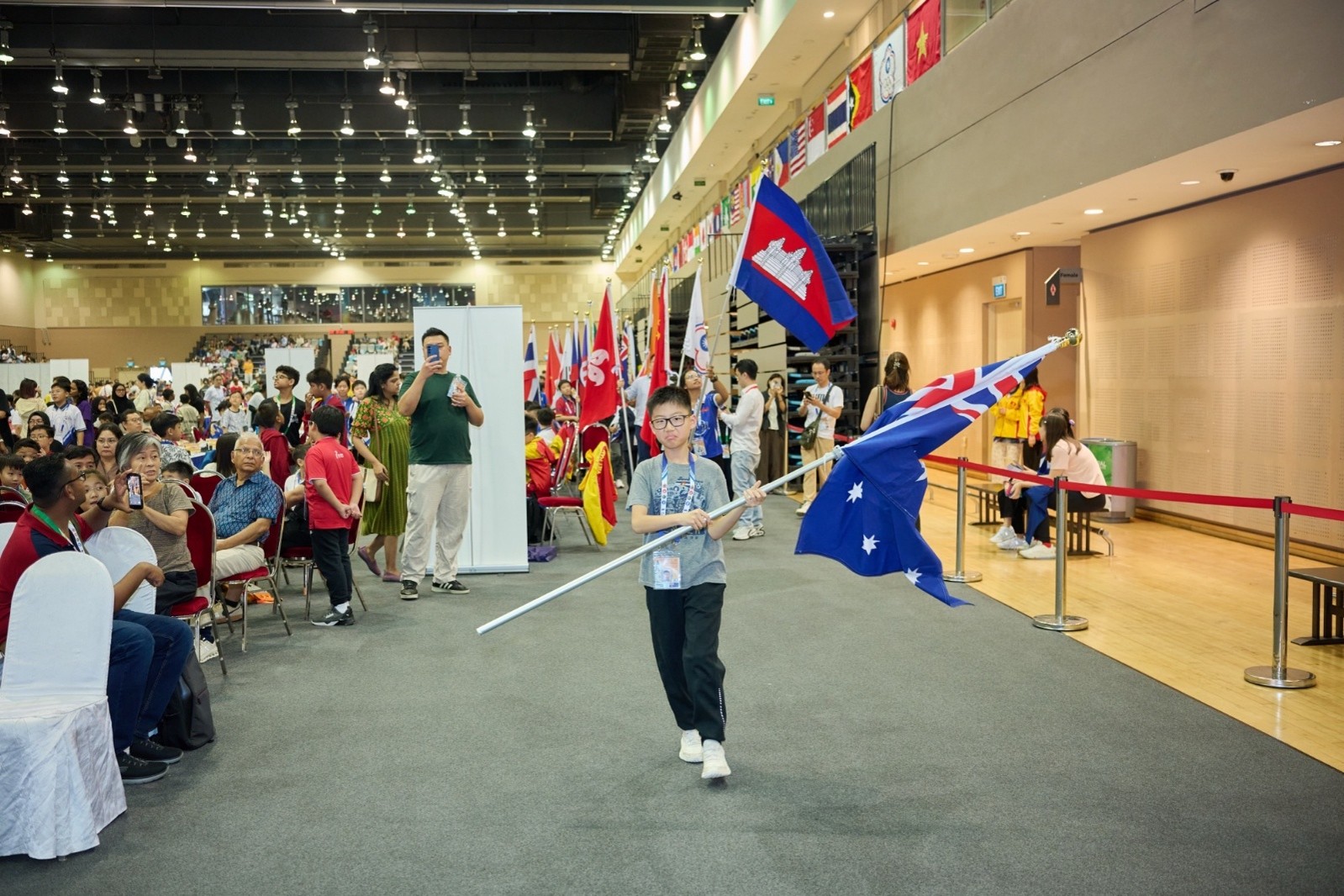
Australian team's flag-bearer Leo Kuncoro (NSW)
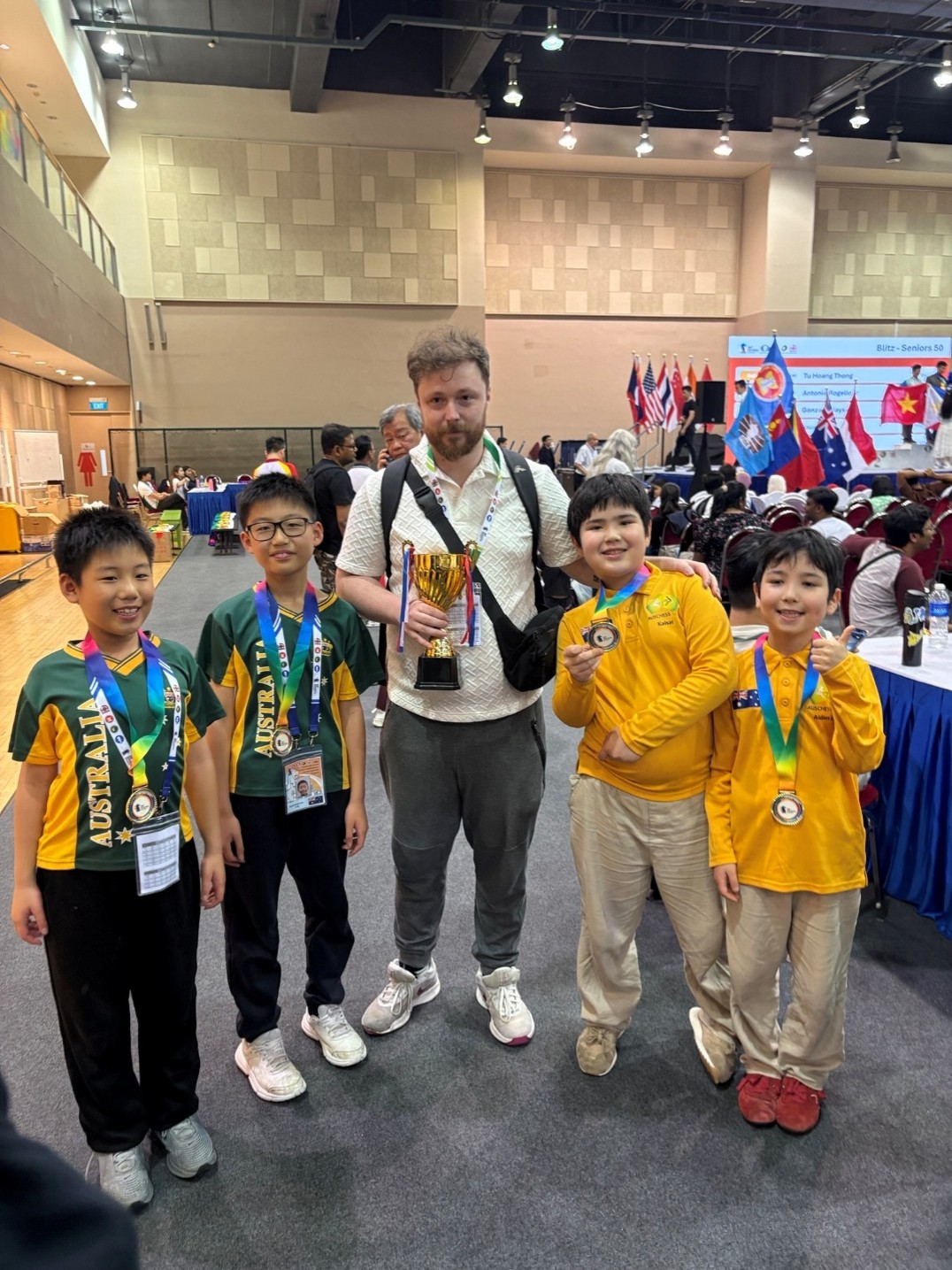
2026 ASEAN+ Chess Championships medallists Harvey Kuncoro (NSW), Leo Kuncoro (NSW), IM James Morris (VIC), Kaisar Batyrbekov (VIC), Aidan Batyrbekov (VIC)
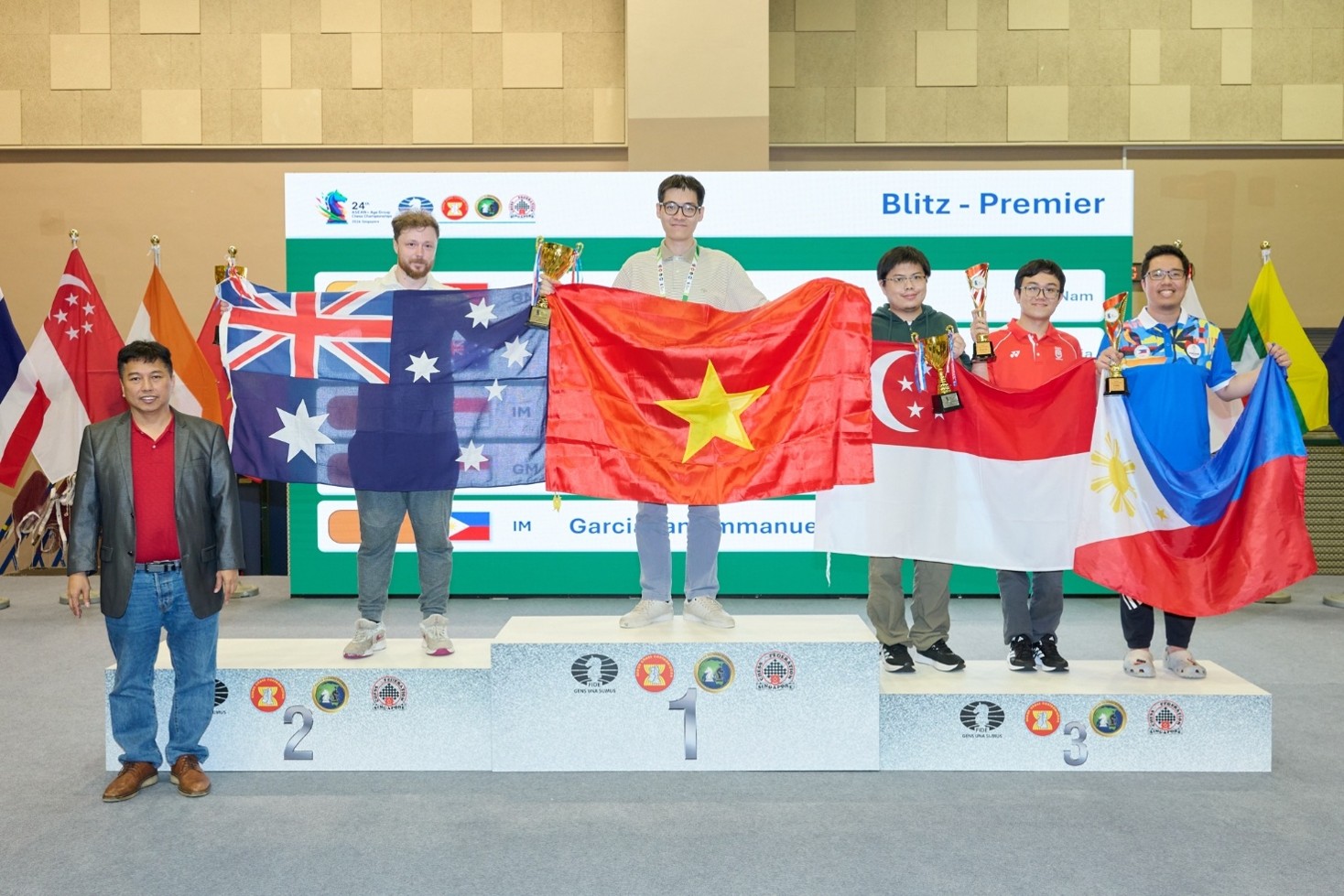
2026 ASEAN+ Chess Championship winners – Blitz (Premier), awarded by GM Jayson Gonzales (Philippines).
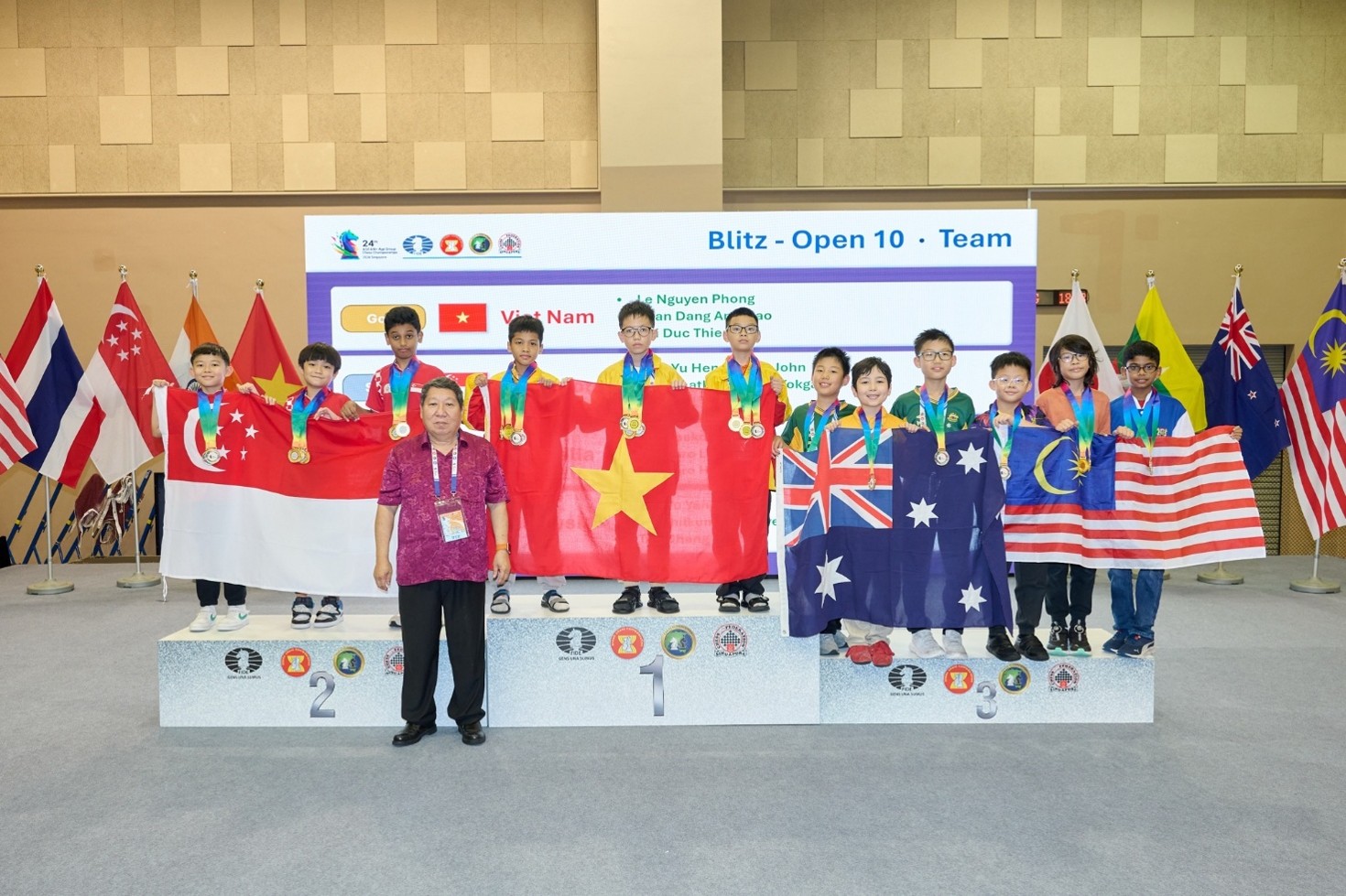
2026 ASEAN+ Chess Championship winners – Blitz (U10 Teams), awarded by FM / IA Bong Bunawan (Indonesia).
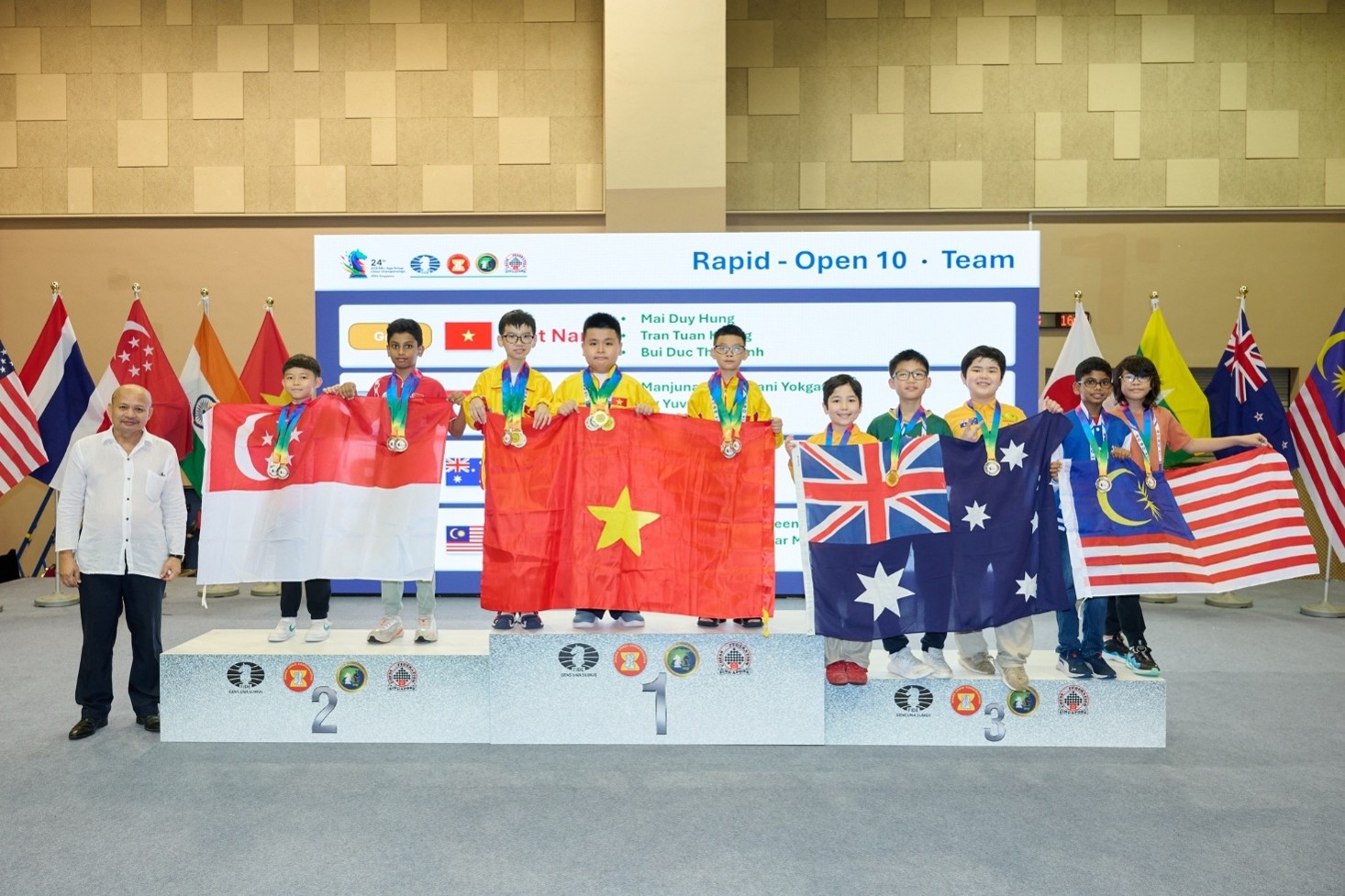
2026 ASEAN+ Chess Championship winners – Rapid (U10 Teams).
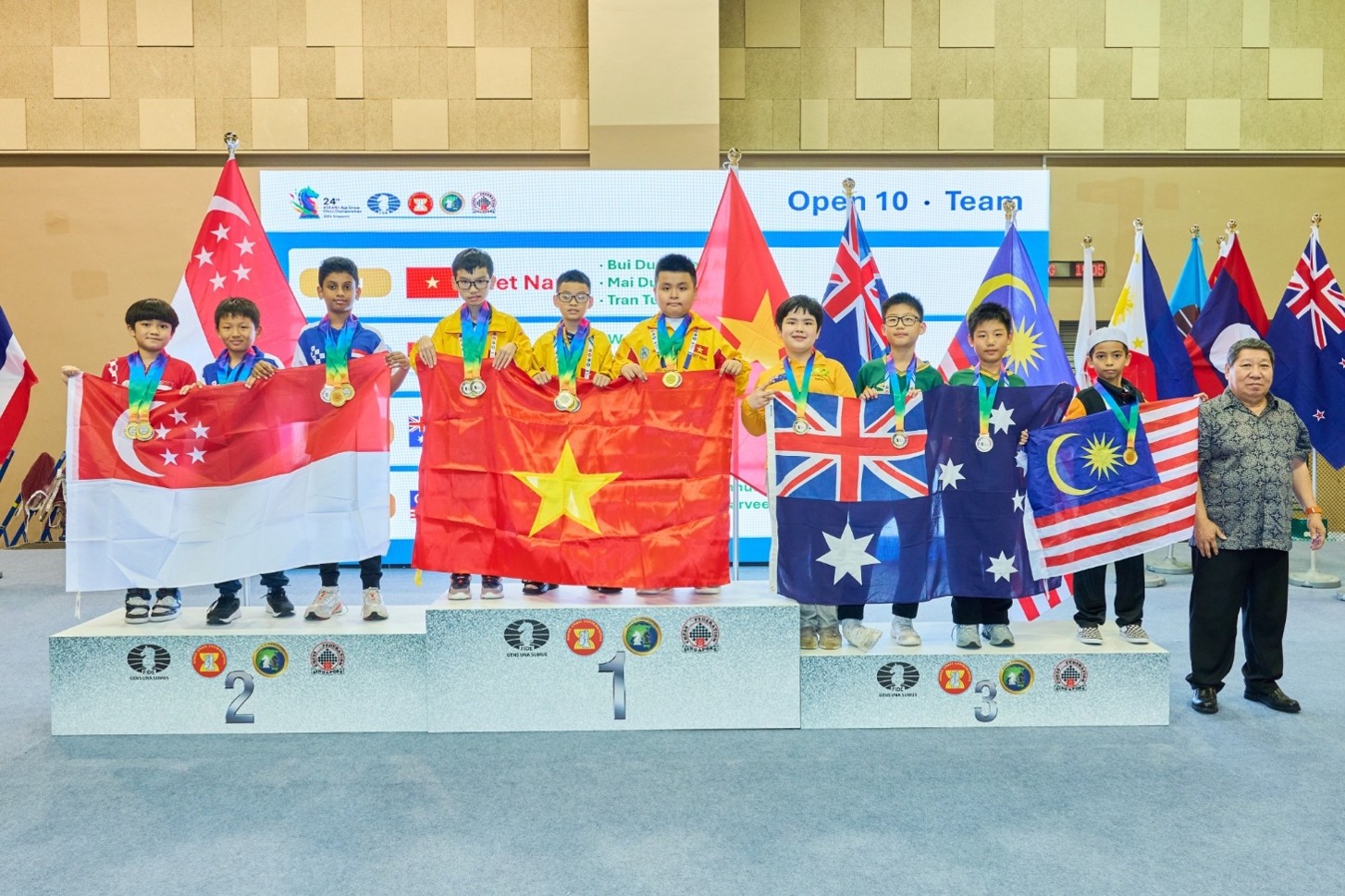
2026 ASEAN+ Chess Championship winners – Classical (U10 Teams), awarded by FM & IA Bong Bunawan (Indonesia).
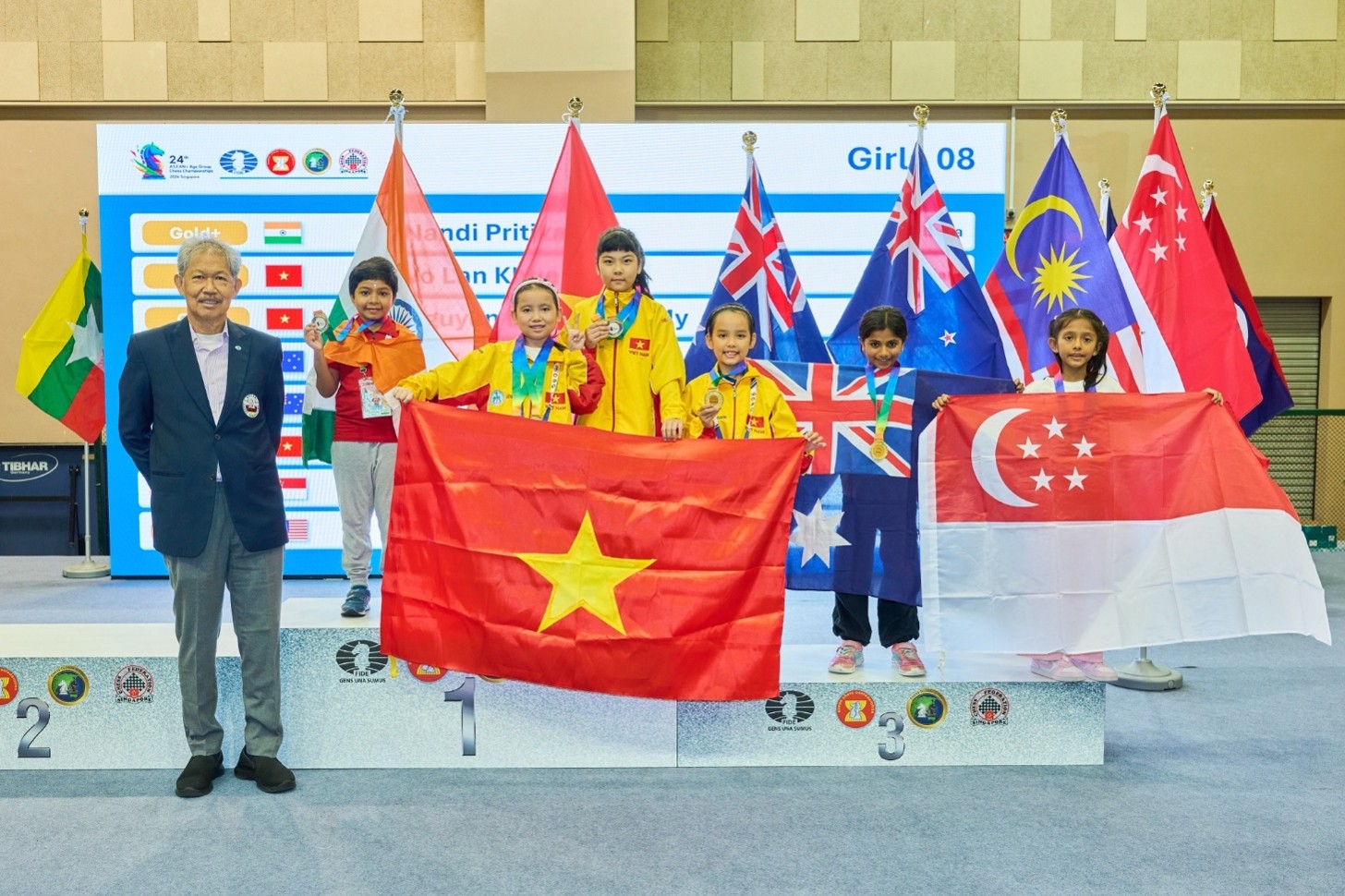
2026 ASEAN+ Chess Championship winners – Classical (G U8), awarded by Yussof Rahman (Brunei Darussalam)


 Melbourne, Australia
 secretary.chess.victoria@gmail.com
 https://www.chessvictoria.org.au